
AUFENTHALTESTELLE VAIHINGEN – PROPOSAL FOR THE COOPERATIVE PLANNING WORKSHOP
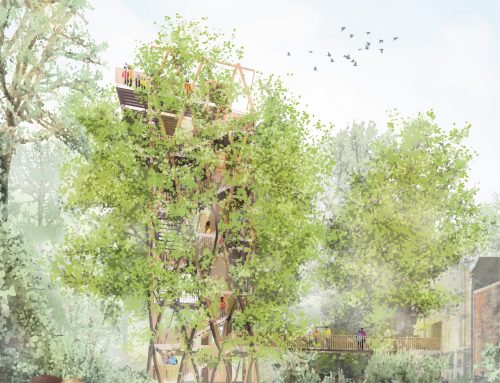
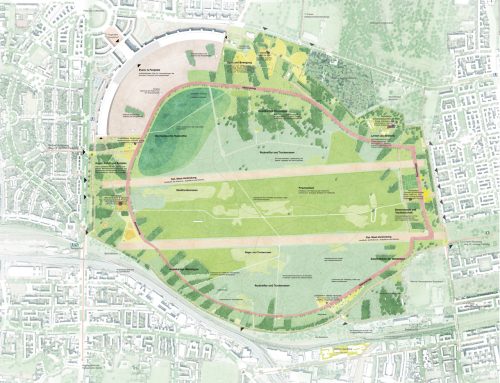
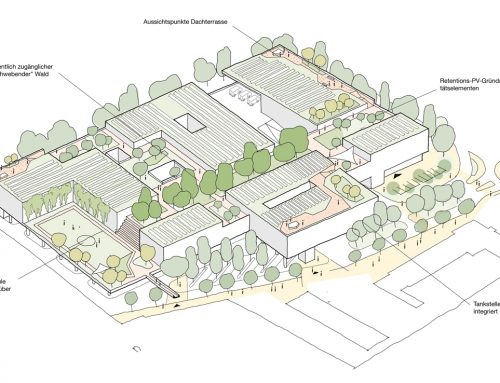
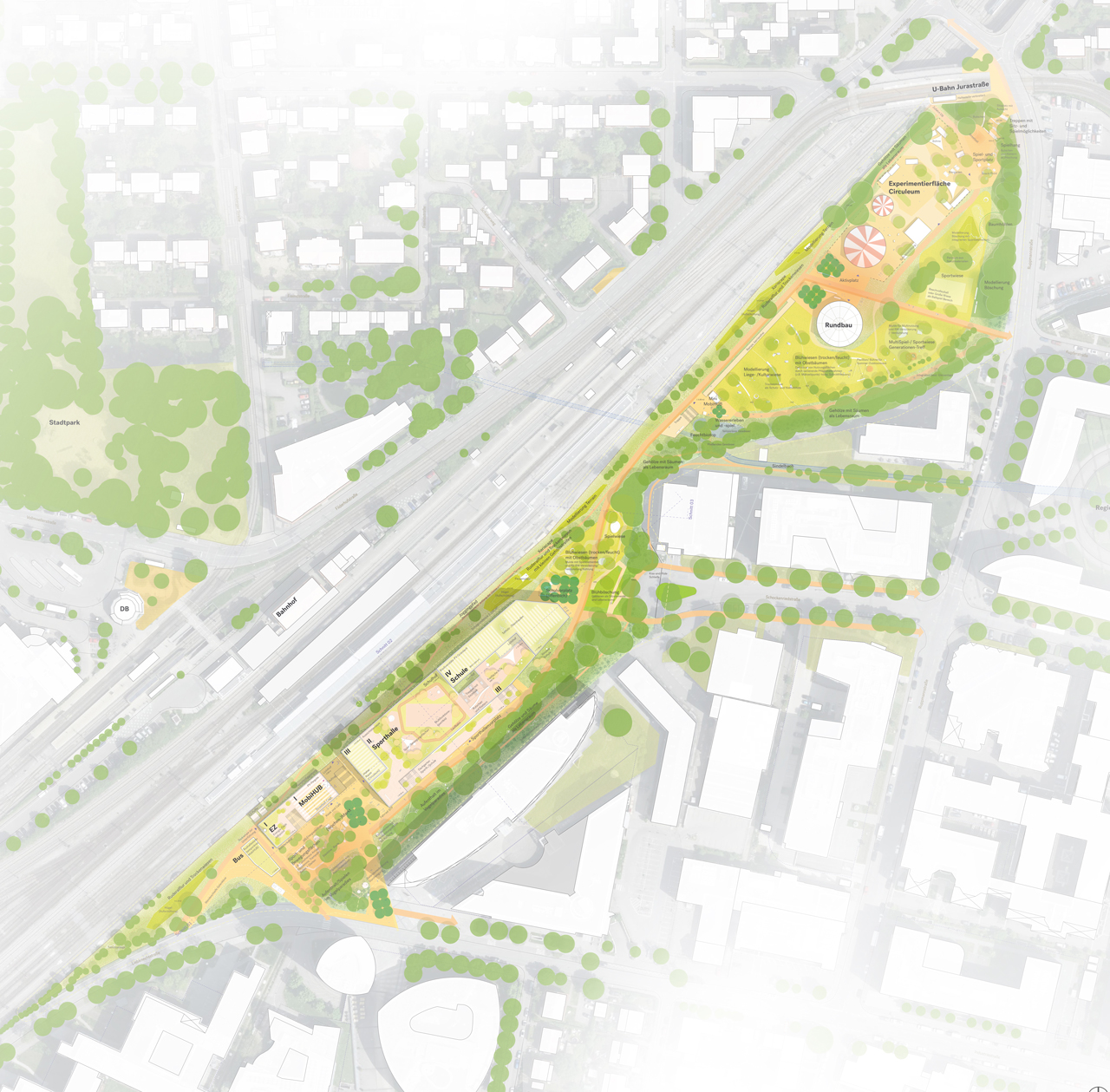
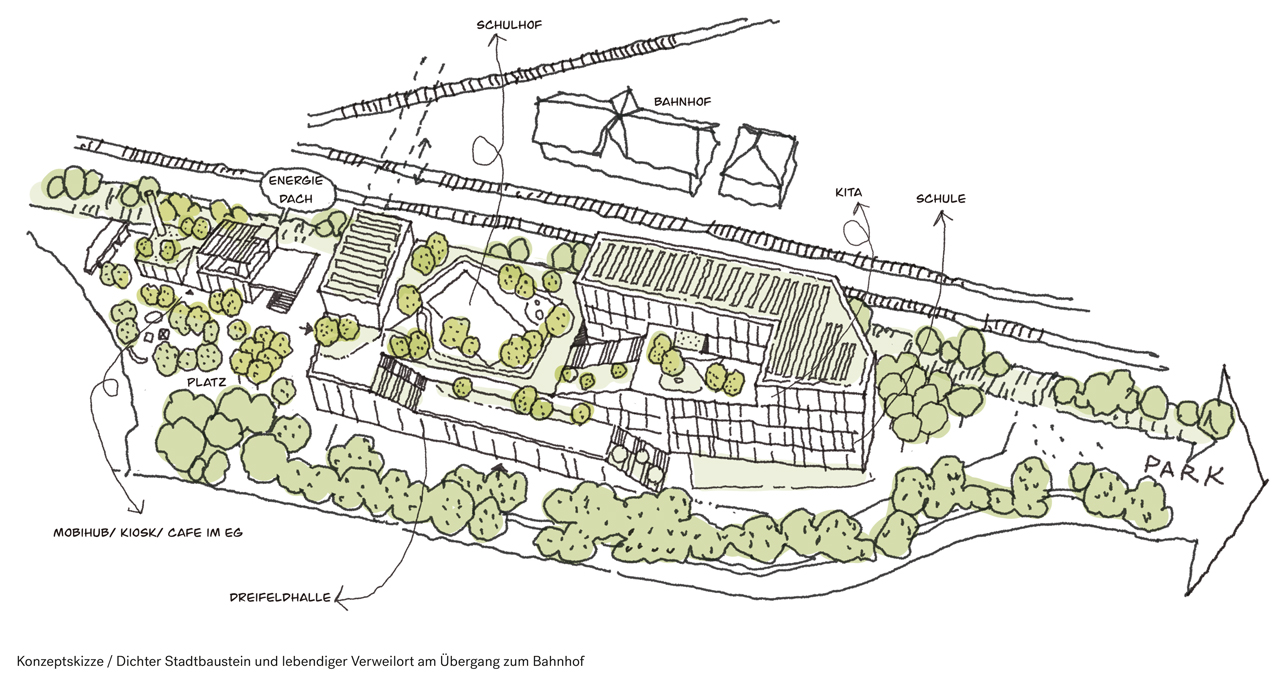
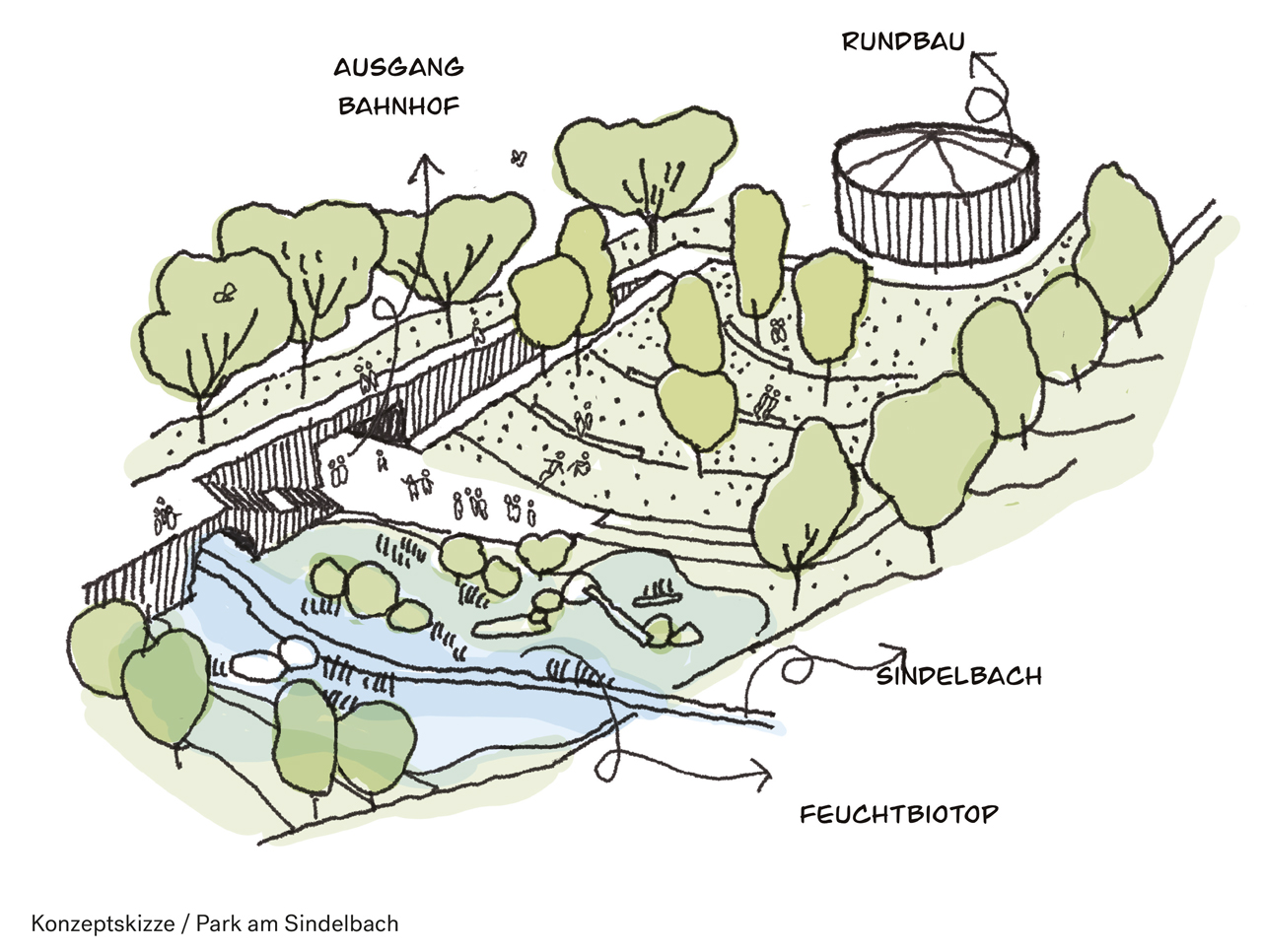
How can an infrastructure edge become a shared habitat for humans and animals? For the AufentHaltestelle Vaihingen, Studio Animal-Aided Design, together with Daniel Schönle Architektur und Stadtplanung, developed a concept that interweaves urban transformation, biodiversity, and social use. The proposal is based on a spatial duality of density and openness. In the southwest, an urban hub emerges, bringing together mobility, education, and sports. In the northeast, a diverse park landscape unfolds, centred around the Circuleum—an experimental space for culture, encounter, and temporary uses that is preserved and further developed as a social and programmatic anchor.
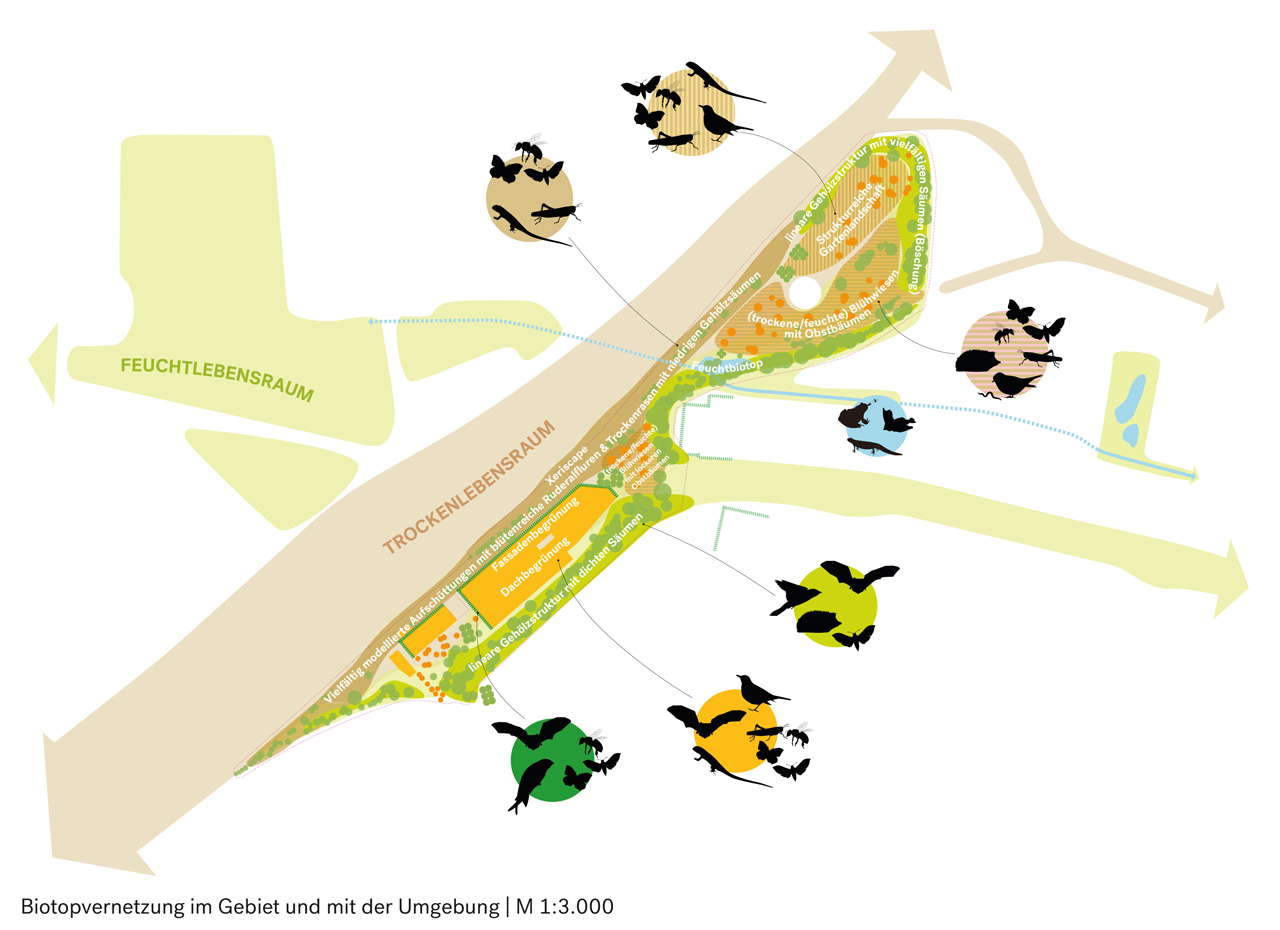
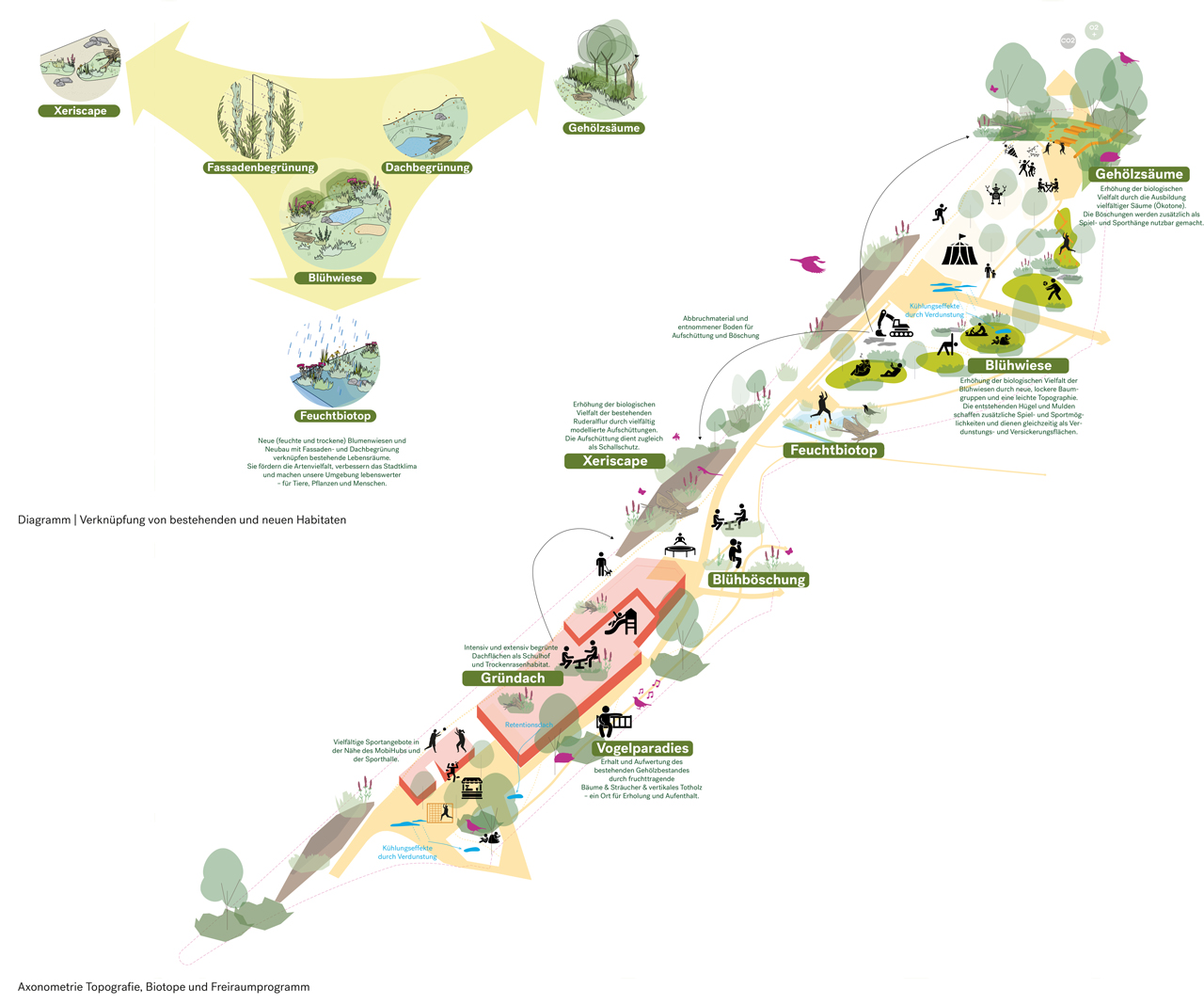
Between these two poles, a network of open spaces forms an ecological backbone. A linear xeriscape creates dry and warm habitats for specialised species, while wetland biotopes are established along the restored Sindelbach stream. Woodland edges, meadows, and ruderal habitats connect these spaces, embedding ecological processes within the urban landscape. Animal-Aided Design serves as a guiding design principle throughout the project. The requirements of selected target species shape spaces, materials, and uses from the very beginning. The result is a network of open spaces that simultaneously functions as places for recreation, movement, and habitat—robust, adaptable, and well connected to its surroundings. The concept is complemented by a blue-green infrastructure that links water, vegetation, and built structures, transforming the site into a climate-resilient system.
PLACE
Stuttgart, Germany
CLIENT
Landeshauptstadt Stuttgart, Amt für Stadtplanung und Wohnen
PROJECT-PARTNER
PROJECT-TEAM
Qingyu Liang, Ariane Mutzel, Thomas E. Hauck (SAAD)
GRAPHIC
Sarah Sutter, Aly Elsayed & Qingyu Liang
TIME
2025
LINKS